Chance is always powerful. Let your hook be always cast; in the pool where you least expect it, there will be a fish. -Ovid
When I was a freshman studying painting at the Maryland Institute College of Art, I had the most wonderful professor. Her name was Susan Main, and she was and is a fabulous artist and teacher. She taught a class called Automatic Triggers, and whenever I am feeling extra prickly and uninspired— and ESPECIALLY when I feel like what I am making is becoming a bit stale and inauthentic, I try to take myself back to Automatic Triggers.
Being an artist is hard. There is no map for us. We are often grasping in the dark, trying to excavate content from our very being, and sometimes, the pressure and need to create can make one feel totally overwhelmed. I should know, I am feeling that way in this very moment! We live in a society nowadays that values quantity over quality (Likes, Follows, you know what I am talking about) and this has caused us to forget that the important work of the artist is to navigate through the world, a feeling and sensitive creature, and to turn those feelings into a product that can make others around us feel seen. To communicate in the most authentic way the human experience and to help teach lessons in only the way an artist can. And what is most the crucial component our work can possess? Authenticity. When something is inauthentically made, it lacks value and depth and becomes merely decorative, rather than meaningful. The role of us artists is to keep digging; to delve into the unknown, ready to grasp at that bit of light and self when it makes itself available, and to spin those fibers into meaningful, digestible ART.
So, let’s begin.
The creation of something new is not accomplished by the intellect but by the play
instinct acting from inner necessity. The creative mind plays with the objects it loves.
– C.G. Jung
The idea of Automatic Triggers comes from the surrealist practice of working
spontaneously, and discovering what one’s natural tendencies are. These practices were then adopted by the Abstract Expressionists whose works retain a sense of play, spontaneity, and gesture.
What are your tendencies? What is your natural mark making style? What images do you find yourself drawn to? If you are left to doodle aimlessly, thoughtlessly, what comes out of your pencil? What do you notice? What color palettes feel right to you? In essence, what is your visual language?
Exercise 1- Make Something
So, you’re feeling a bit stale… grab your sketchbook. Go on a walkabout. Pick things up. Smell the air. Feel. Now, open up your sketchbook and make a mark. Keep going. Don’t think! Don’t worry about the end result, that will stifle you. Is it ugly? Who cares! Now, study the page. What do you see? Are the marks painterly, gestural? Or clean and geometric. Are your shapes reading as feminine or masculine? Do you make dotted lines? Are your markings aggressive and hard or soft and gentle? Is what you draw abstract or did something representational show up?
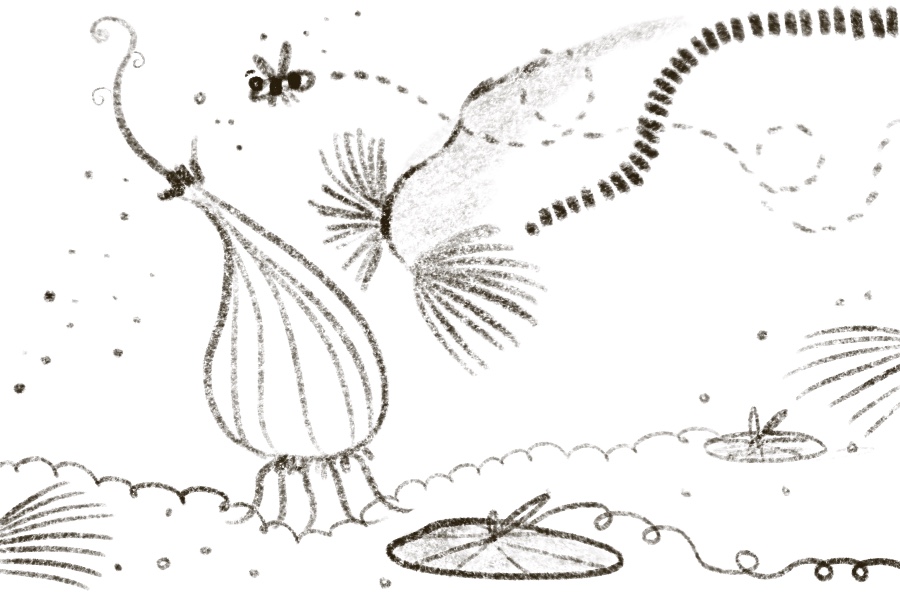
Now, take what you have made, and run with it. Use your triggers to inform a new piece, one that is created with more direction. As an illustrator now, I can use these trigger discoveries to help inform the more narrative pieces I am making nowadays. However, this process is more about getting to know yourself and bettering your practice than anything else, so don’t feel pressured to made something perfect. That is never the goal of these exercises.
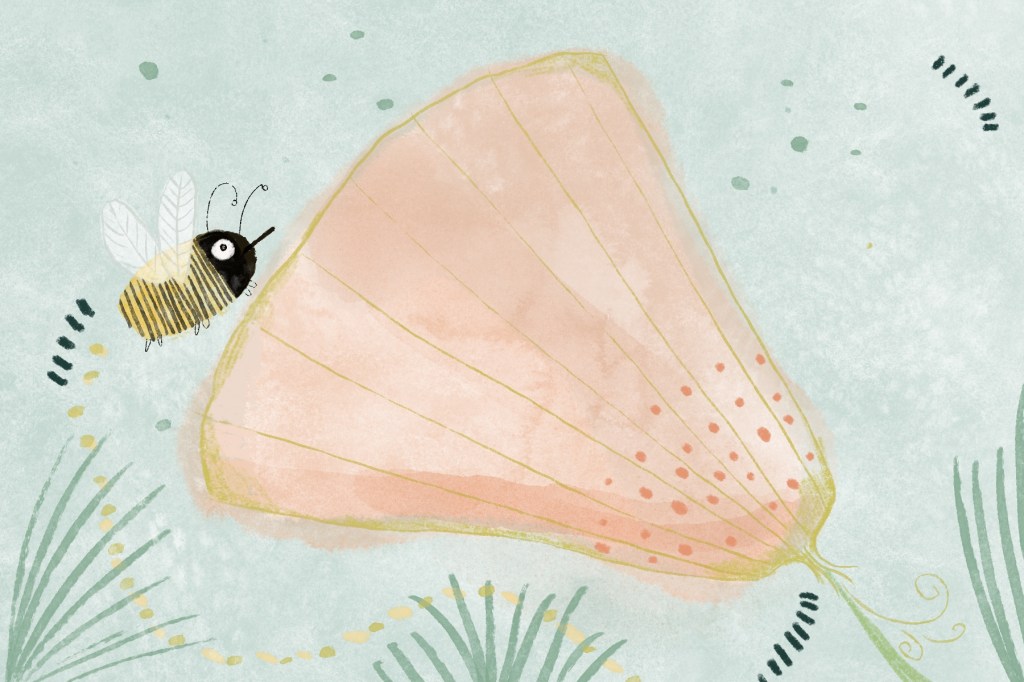
Address process. What did it feel like? How did you begin? Did the process evolve after the painting was started? Did you plan the painting before hand, begin with a feeling surrounding the trigger and try to match that feeling formally, place the trigger on the canvas…etc.??? Difficulties? Structure, material, time, clarity, techniques or lack of (additive, subtractive), indecision, attachment. – Susan Main, class syllabus.
Exercise 2- SUBVERT!
Observe and identify formal elements from you Exercise 1. Use specific descriptive language: organic, geometric, rigid, illustrative, abstract, transparent, opaque, etc. Notice the palette you used.
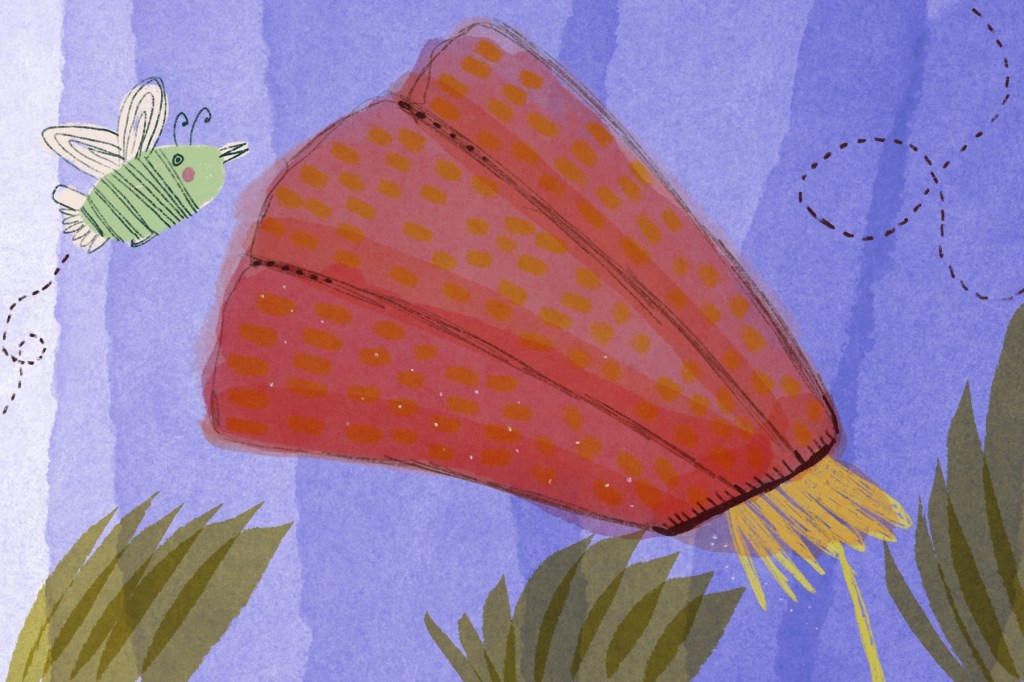
Now, take those elements and create a contrasting piece.
Did you use organic lines? Make them rigid. Did you use geometric shapes? Make them organic. Flip everything on its head.
Exercise 3- Tools
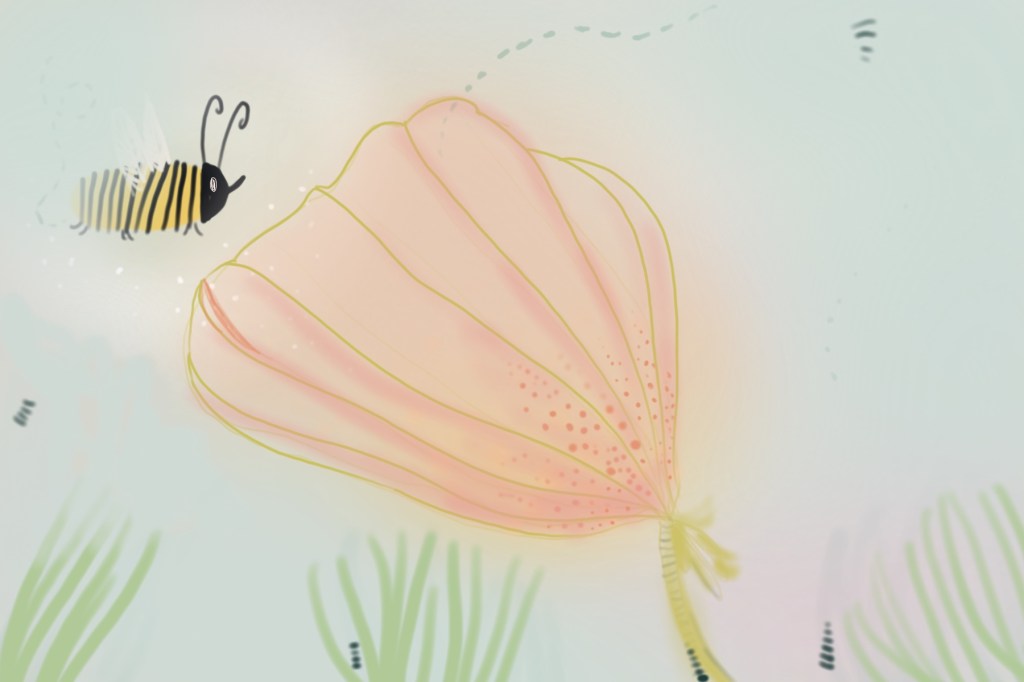
In the original assignment, because this was meant to be a painting class, we were not to use brushes. We could only use a tool smaller or larger than our hand. For those of us who work digitally now, you can limit yourself to two very different digital brushes that you never use. Challenge yourself. Observe what this does to your trigger.
You are lost the instant you know what the result will be. -Juan Gris
These techniques are not meant create your greatest works, but rather to encourage you to consider your process and to explore and challenge yourself in unexpected ways. It is important to remain fluid in our creative practice, and to fight off rigidity and perfectionism. Art is a process. There is always room to grow.
Happy creating!
Thanks to Susan Main for providing me with all the syllabus information from this class (15 years ago!). You can see her work at www.susanmain.net.
Twitter: @andenwilder
Instagram: @andenwilderillustration
Website: www.andenwilder.com

 The Cuddlefish Gang: Together We Can Do AnyFIN!